AI Mock Interviews for Students: What Universities Need to Know
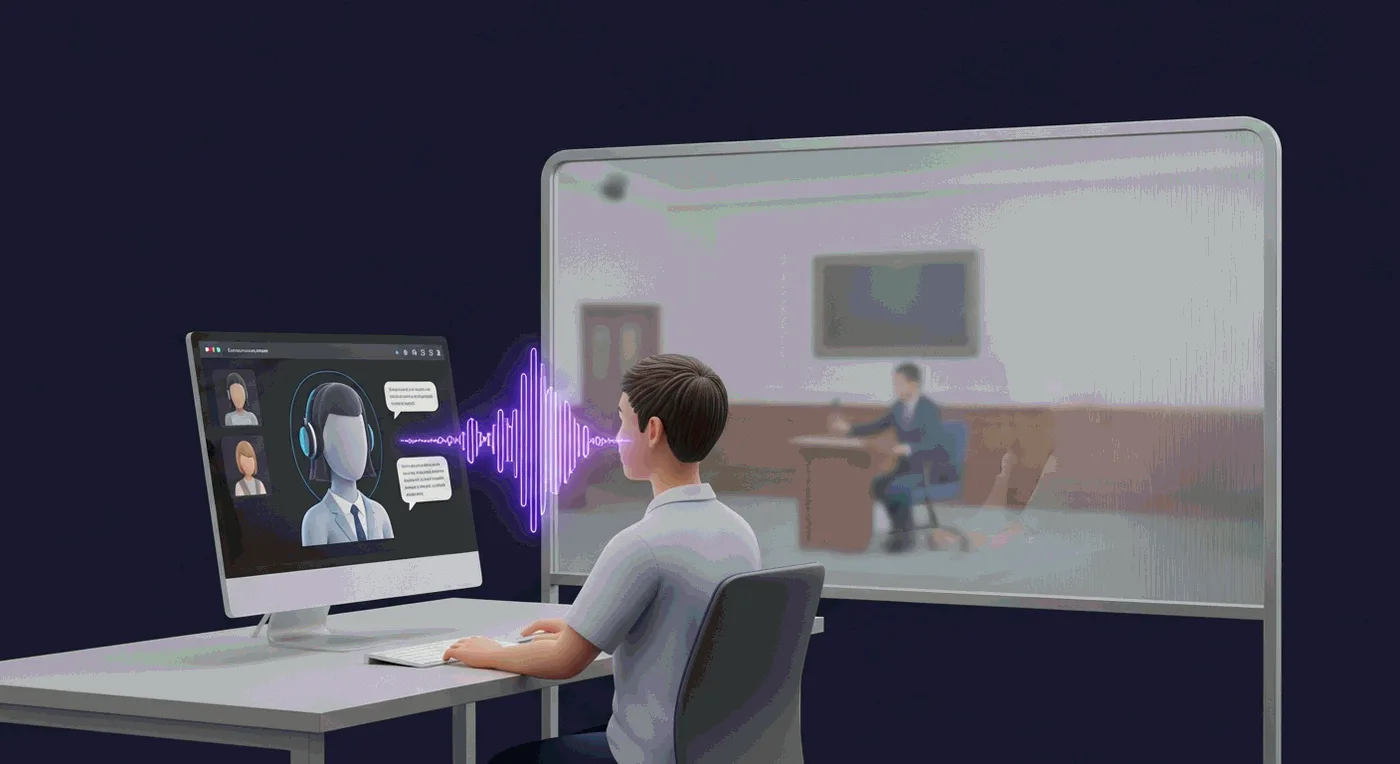
AI mock interviews for students are becoming one of the more practical applications of voice AI in higher education — and career services teams across APAC are starting to pay attention. The problem they solve is straightforward: most students graduate without ever having done a real interview. They know it. Career advisors know it. And every year, the same cohort of capable graduates gets filtered out in first-round screening simply because they’ve never practiced under pressure.
This post is for university career services directors, heads of student employability, and the people responsible for making sure graduates actually land jobs. We’ll cover how AI mock interview technology works, what to look for before you adopt it, where it genuinely helps students, and what the realistic limitations are.
The Problem AI Mock Interviews Are Trying to Solve
Career advisors at most universities spend a significant portion of their week doing something that doesn’t scale: one-to-one mock interviews. It takes 45–60 minutes per student to run a decent mock, give structured feedback, and document it. Multiply that across hundreds — or thousands — of students approaching graduation season, and the math doesn’t work.
According to data from Talvin AI’s university career services research, 70% of students feel unprepared for their first industry interview. The gap isn’t willingness to practice. It’s access. Advisors can only run so many sessions. Slots fill up fast. Students who don’t book early enough simply go into interviews cold.
The downstream effect shows up in graduate employment statistics — which most universities track closely and some are publicly ranked on. A student who could have performed well in an interview, given adequate preparation, doesn’t. That’s a problem AI can directly address.
How AI Mock Interviews for Students Actually Work
The core mechanic is straightforward. A student accesses the platform, selects a role type or industry scenario, and conducts a practice interview with an AI interviewer in real time. The AI asks questions, listens to responses, and in more advanced implementations, asks follow-up questions based on what the student actually said — rather than running through a fixed script.
After the session, the platform generates a feedback report. Depending on the system, this might cover communication clarity, answer structure, use of specific examples, confidence indicators, and how well the student addressed the question asked versus what they prepared to say.
The key distinction worth understanding is the difference between static AI mock interview tools and adaptive voice AI platforms:
- Static tools ask pre-written questions in a fixed sequence. They may record video or audio and apply scoring. The student gets feedback on their responses but the interview itself doesn’t react to what they say.
- Adaptive voice AI platforms — like Talvin AI’s Sally — conduct genuinely dynamic conversations. If a student gives a vague answer, the AI probes further. If they mention a specific project, the AI follows up on it. The experience is closer to a real interview than any scripted tool.
For interview preparation specifically, the adaptive model is more valuable. Students need to practice being pushed — not just delivering prepared answers to expected questions.
What Universities Should Evaluate Before Adopting AI Mock Interview Tools
1. Does it reflect the actual interview formats students will face?
A hospitality student preparing for front-of-house roles needs different scenarios than an engineering graduate entering a technical screen. Generic interview simulators cover standard competency questions reasonably well. But if your institution places graduates into specific industries, look for platforms that offer industry-specific scenarios — including role simulations that reflect actual job situations, not just standard “tell me about yourself” sequences.
Talvin AI’s Job Tryouts feature, for example, places candidates inside realistic, role-specific scenarios — simulating real workplace situations rather than abstract interview questions. For students heading into customer-facing, sales, or hospitality roles, this kind of preparation is considerably more useful than standard mock interview formats.
2. How does it handle non-native English speakers?
This is a significant consideration for APAC universities and any institution with a substantial international student cohort. Several AI interview tools use speech-to-text and scoring models calibrated primarily for native English speakers. Non-native speakers encounter transcription errors, scoring anomalies, and feedback that doesn’t reflect their actual performance.
Talvin’s voice AI is engineered specifically for APAC linguistic diversity — with measured pacing and neutral, easy-to-understand accents designed to reduce friction for non-native English speakers. If your student population is predominantly non-native English speaking, this is not a minor technical detail. It’s the difference between a tool that helps and one that discourages.
3. Can it scale to your entire student population without scheduling bottlenecks?
The core value proposition of AI mock interview tools for universities is that they remove the scheduling constraint entirely. Any student should be able to access a practice session at any time — before a 6am application deadline, the night before a final-round interview, or over a weekend when career services is closed.
Platforms built on scalable cloud infrastructure can handle hundreds of simultaneous sessions. Talvin AI, for instance, runs on a serverless architecture that auto-scales — meaning 500 students practicing simultaneously generates 500 isolated sessions, not a queue. For career services teams thinking about deployment at scale, this matters: a tool that creates its own bottleneck through limited concurrent access hasn’t solved the original problem.
4. What does the feedback report actually tell students?
Post-interview feedback varies significantly in usefulness. Vague scores on “confidence” or “clarity” don’t give students actionable direction. Useful feedback identifies specific moments in the conversation — where an answer lacked structure, where a follow-up question wasn’t addressed, where communication was strong and why.
Look for platforms that produce structured, exportable feedback reports. Career advisors should be able to review a student’s session data, track improvement over multiple practice runs, and identify which students need additional support. Analytics that show engagement and improvement at the cohort level are also valuable for demonstrating programme outcomes to faculty and administration.
5. Is the experience low-friction enough that students will actually use it?
The best interview preparation tool is the one students use repeatedly, not the one with the most features. Platforms that require elaborate setup, camera configuration, or software installation create drop-off before the first session begins.
Voice-first interfaces — where the student simply speaks and the AI responds — lower this barrier considerably. The interaction feels like a conversation rather than a recording session, which reduces the self-consciousness that prevents many students from practicing as often as they should.
Where AI Mock Interviews Genuinely Help Students
Safe failure space
Students can stutter, freeze, go blank, and start over — without consequences. That’s valuable. The psychological safety of practicing with an AI rather than a person they want to impress means students are more likely to push themselves into uncomfortable territory. A student who freezes three times in a mock session is far better prepared than one who has only ever given polished answers to expected questions.
Consistent, repeatable feedback
Unlike human mock interviewers — whose feedback varies based on who runs the session — AI feedback is consistent. Every student gets evaluated against the same criteria. This is particularly useful for career services teams running structured employability programmes where they need to demonstrate consistent coaching standards.
Industry-specific preparation at scale
A career services team of five advisors cannot feasibly provide specialised mock interview preparation across every industry their graduates enter. AI platforms with role-specific templates and job simulation scenarios can cover nursing, engineering, finance, hospitality, and retail — simultaneously, without additional staff.
Preparation data that supports advisory conversations
When a student comes in for a one-to-one advisory session having already completed three AI mock interviews, the advisor’s time is used far more effectively. They’re not running a baseline assessment — they’re reviewing real performance data and working on specific, documented gaps. The AI session becomes prep work for the human conversation, not a replacement for it.
What AI Mock Interviews Don’t Replace
Being direct about this matters. AI mock interviews are a preparation tool, not a complete career readiness programme.
They don’t replicate the interpersonal dimension of panel interviews, informal assessments, or situations where body language and room dynamics are part of what’s being evaluated. They don’t teach students how to research an employer, negotiate an offer, or navigate company culture signals in an interview conversation. And they don’t replace the judgment of an experienced career advisor who knows the student, understands their trajectory, and can give contextual guidance that no AI system is equipped to provide.
The right framing for AI mock interviews in a university context is this: they remove the access and scalability problem so that human advisory time can be focused where it creates the most value. Every student gets unlimited practice. The advisor’s attention goes to the students who need it most.
Talvin AI for University Career Services
Talvin AI was built for high-volume interview scenarios — originally for enterprise hiring teams managing hundreds of candidates at once. The same infrastructure that allows a company like Janashakthi Group to screen 150 candidates in five days (a process that previously took four to five weeks) applies directly to universities running mass mock interview programmes.
For career services teams, Talvin offers:
- Unlimited practice interviews for every student — no scheduling bottlenecks
- Industry-specific scenarios covering engineering, nursing, hospitality, sales, finance, and more
- Detailed feedback reports on communication skills, answer structure, technical knowledge, confidence, and cultural fit signals
- Analytics showing which students are practicing and how they’re improving over time
- APAC-optimised voice AI designed for non-native English speakers — not calibrated for US or UK accents
- Scale without headcount increase — from 500 to 50,000 students on the same platform
Talvin has also been invited to bid for international government university tenders in the career services and student interview training space — a signal that the platform is being evaluated at institutional scale, not just departmental pilot level.
If your institution is assessing options, the AI candidate screening product page gives a clear overview of how the interview engine works, and the Job Tryouts page covers the role simulation layer that’s most relevant to student preparation for practical, customer-facing, or technical roles.
Pricing starts at $175/month, with plans that scale to institutional deployment. For universities evaluating at programme or faculty level, the Enterprise tier includes custom configuration, unlimited users, and white-label branding options.
Frequently Asked Questions
What is an AI mock interview for students?
An AI mock interview is a practice interview conducted with an AI system rather than a human interviewer. The student speaks their answers aloud, the AI responds in real time, and the platform generates structured feedback after the session. More advanced platforms use adaptive voice AI that asks contextual follow-up questions based on what the student actually says — making the practice more realistic than static question-and-answer tools.
Are AI mock interviews effective for interview preparation?
Yes, particularly for students who need repeated, low-stakes practice before facing real interviews. The primary benefit is access — students can practice as many times as they need, at any time, without booking a session with an advisor. Research from platforms using job simulation interviews shows that candidates who practice in realistic scenarios perform significantly better in structured assessments than those who rely on unstructured preparation.
Can AI mock interview tools handle non-native English speakers accurately?
This varies significantly by platform. Several AI interview tools use speech recognition and scoring models trained primarily on native English speech, which produces transcription errors and inaccurate feedback for non-native speakers. Platforms built specifically for APAC markets — like Talvin AI — are engineered for linguistic diversity, with pacing and accent calibration designed for non-native English speakers across Southeast and South Asia.
How does AI mock interview software fit into a university career services programme?
AI mock interview tools work best as a complement to human advisory services, not a replacement. They remove the scheduling and scalability constraint — giving every student access to unlimited practice — so that career advisor time can focus on higher-value conversations. Advisors can review AI-generated feedback reports before one-to-one sessions, allowing them to focus on specific documented gaps rather than running baseline assessments from scratch.
What industries can AI mock interviews cover for university students?
The coverage depends on the platform. Basic tools handle generic competency and behavioural questions applicable across industries. More advanced platforms like Talvin AI offer industry-specific scenarios across engineering, nursing, hospitality, sales, aviation, food and beverage, and finance — as well as job simulation scenarios that place students inside realistic workplace situations, not just abstract interview question sequences.
How much does AI mock interview software cost for universities?
Pricing varies by platform and deployment scale. Talvin AI’s plans start at $175/month for smaller deployments, with the Enterprise tier offering custom pricing for institutional-scale rollouts covering unlimited students and users. For universities evaluating cost per student at scale, the per-minute consumption model means costs scale with actual usage rather than being charged per seat regardless of engagement. See the full pricing page for current plan details.
Can students use AI mock interviews to prepare for technical interviews?
Yes, if the platform supports technical role scenarios. Talvin AI’s AI agent (Sally) is specifically designed to allow non-technical interviewers to vet technical candidates — which means it can ask technical scenario questions and probe follow-up answers in real time. For students preparing for software engineering, finance, or other technically assessed roles, this provides more useful preparation than general communication-focused tools.
Ready to Scale Interview Preparation Across Your Institution?
If your career services team is exploring AI mock interview tools for students, Talvin AI is worth evaluating — particularly if your student population includes significant numbers of non-native English speakers, or if you’re placing graduates into industries where practical role performance matters as much as interview polish.
The platform runs 24/7, handles hundreds of simultaneous sessions, and generates structured feedback that your advisors can actually use. And it scales from a single department pilot to institution-wide deployment without requiring additional headcount.
Book a demo with the Talvin team to see how it works for university career services — and to discuss whether the platform fits your institution’s specific requirements.